
Understanding Dog Tail Signals and Behavior
Discover what your dog's wagging tail really means. Learn how speed, position, and movement convey different emotions, from confidence to uncertainty. Explore the nuances of dog body language to better understand your furry friend.
Buddy 🦮
4/14/20264 min read
The Basics of Tail Wagging
Understanding the mechanics of tail wagging is crucial for interpreting a dog’s emotions and intentions. A dog’s tail is more than just a simple extension of its body; it is a complex structure made up of bones, muscles, and nerves. The tail typically consists of several vertebrae, housed within a supportive muscular framework. This anatomy allows dogs to control the movement of their tails with precision, facilitating a wide range of tail motions that can indicate different emotional states.
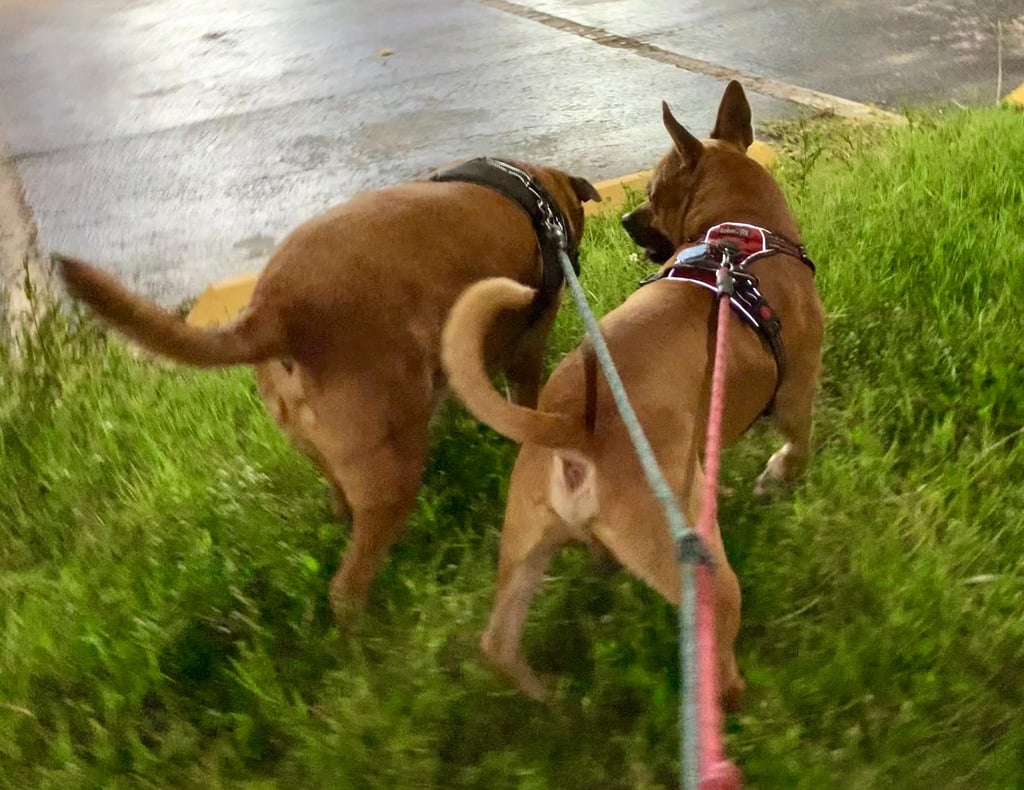
One of the primary reasons dogs wag their tails is to communicate. Dogs do not have the ability to speak in the human sense; instead, they rely on body language, vocalizations, and tail movements to convey messages. For instance, a tail wagging at a high speed, often held high, is generally associated with excitement or happiness. Conversely, a slow wag or a tail held low can indicate uncertainty or submission. The direction in which the tail wags can also provide clues; for example, a wagging tail that moves more to the right may denote a positive emotional state, while a wag towards the left can suggest a more anxious feeling.
Biologically, the tail serves several essential functions beyond communication. From an evolutionary perspective, the tail aids in balance, particularly for breeds that engage in physical activities such as running or playing. The neurological connection between a dog's emotional state and tail movement is significant; certain brain chemicals associated with emotions are directly linked to the muscle movements necessary for tail wagging. Understanding these fundamentals not only enhances our knowledge of canine behavior but also fosters stronger bonds between dogs and their owners as we learn to interpret their non-verbal cues effectively.
Understanding Tail Wagging: Speed and Rhythm
The wagging of a dog's tail is often a primary means of communication, conveying various emotional states and intentions. The complexity of tail wagging lies not only in its direction but also in the speed and rhythm, which can significantly indicate what a dog is experiencing at any given moment. Observing these variations can provide deeper insights into a dog's behavior.
Typically, a fast, vigorous tail wag signifies a positive emotional state, such as excitement or happiness. For instance, when a dog enthusiastically greets its owner after a long day, the tail may whip back and forth rapidly, showcasing an eagerness to engage. This swift motion often accompanies other joyful behaviors, such as jumping or barking, reinforcing the idea that the dog is in a positive emotional state.
Conversely, a slow wagging tail can indicate uncertainty or hesitation. A dog that cautiously approaches a new situation, such as meeting a stranger, may exhibit a slow, gentle wag. This rhythmic movement may appear more like a subtle flick rather than an enthusiastic beat. In such scenarios, it's essential to read the dog's body language in conjunction with the tail movement; a low posture and tense body may suggest that the dog is feeling anxious or unsure.
Furthermore, the specific context in which the wagging occurs also plays a critical role in interpretation. For example, a faster wagging tail accompanied by a stiff body posture may denote excitement paired with guarded agitation, indicating that the dog is excited but also feels the need to defend itself. Understanding these nuances can foster better communication between humans and their canine companions, enhancing mutual understanding and strengthening the bond.
Understanding the position of a dog's tail is crucial in interpreting their emotional state. A dog’s tail can convey a range of feelings beyond just wagging. For instance, a dog exhibiting a tail held high often displays confidence and a happy demeanor. Breeds such as the German Shepherd and Golden Retriever frequently showcase this tail posture when they are excited or engaged in play. Observing a tail lifted high can indicate that a dog feels secure in its environment and is ready for interaction.
Conversely, a tail that is held low usually signifies submission or a lower energy state. This position is typically seen in breeds like the Basset Hound or the Cavalier King Charles Spaniel. These dogs may assume a low tail position when they approach a new or dominant dog, as a sign of humility and deference. It is essential to interpret this tail position in context, as it may also signify that the dog is relaxed and content.
A tail that is tucked between the legs is a strong indicator of fear or anxiety. Many breeds, such as the Shih Tzu or the Boxer, may exhibit this behavior when they are scared or feeling threatened. This tail position serves as a protective mechanism, signaling that the dog is not a threat. In addition, it may indicate that the dog is feeling insecure or uncomfortable in its surroundings.
In summary, by closely analyzing the tail's position, dog owners can better understand their pet's emotional state, improving communication and interaction. Distinguishing between a tail held high, low, or tucked can give valuable insights into a dog’s confidence, contentment, or fear, empowering owners to respond appropriately.
Context Matters: Situational Awareness for Tail Wagging
Understanding the nuances behind a dog’s wagging tail requires more than just a cursory glance; context plays a pivotal role in interpreting this behavior accurately. While many pet owners may associate a wagging tail with friendliness and excitement, it is essential to recognize that not all tail wags signify a positive emotional state. Situations can greatly influence a dog’s temperament, therefore, it’s crucial to be observant during various interactions.
Consider a scenario where two dogs are engaging in play. One dog may wag its tail vigorously, conveying excitement and enthusiasm. However, the same action in a different context—such as meeting a stranger or an aggressive dog—can indicate nervousness or a defensive stance. That wagging tail may actually signify a warning rather than an invitation for interaction. Recognizing that a wagging tail does not consistently translate to friendly behavior is key for any dog owner.
To assess your dog’s overall body language effectively, examine other indicators in conjunction with tail movement. A relaxed stance, open mouth, or playful bow can complement a wagging tail and reinforce a friendly disposition. Conversely, if the dog’s ears are pinned back, lips are curled, or it adopts a stiff stance, these signals may suggest anxiety or aggression, making it crucial to approach with caution.
Additionally, when socializing dogs in new environments, take note of their reaction to unfamiliar individuals. A slow wag paired with a low position may indicate uncertainty, whereas a high, fast wag can reflect eagerness. As such, fostering a confident demeanor in your pet often requires observing their behavior and adjusting the situation according to how your dog reacts. Knowledge of these contextual factors can significantly enhance your ability to interpret your dog’s tail wags accurately, fostering a safer and more enjoyable experience for everyone involved.