
Best Exercises for Dogs
Discover the best exercises for dogs, including walking, fetch, swimming, and agility training. Learn how to meet your dog's exercise needs based on their age, breed, and health to ensure they stay fit and happy.
Tank and Buddy 🐕🦮
10/3/20268 min read
A Practical Guide to Meeting Your Dog’s Daily Exercise Needs
Healthy adult dogs generally need between 30 minutes and two hours of activity each day. This is a useful starting range, not a universal prescription. The right amount depends on breed, age, body condition, temperament, and overall health. A calm companion dog may remain content with 30 to 60 minutes of moderate activity, while a high-energy working, sporting, or herding breed may require one to two hours of purposeful exercise to stay physically and emotionally balanced.
For many dogs, this routine amounts to one or two walks daily, or approximately seven to 14 walks per week. However, walks represent only one part of a complete exercise plan. A healthy schedule can also include free movement, safe opportunities to explore, interactive play, training exercises, and activities that encourage problem-solving. Sniffing and investigating new environments provide mental stimulation, so a shorter exploratory walk may be more satisfying than a longer route completed at a brisk pace.
It is helpful to distinguish between a minimum baseline and an individualized target. Thirty minutes may be enough for some relaxed adult dogs, but it may leave an energetic dog restless or under-stimulated. Conversely, increasing duration or intensity too quickly can strain muscles, joints, and cardiovascular systems, particularly in dogs that are overweight, older, recovering from illness, or unaccustomed to regular activity. Build new routines gradually, adding time or difficulty in small steps.
Observe your dog to assess whether the daily amount is appropriate. Excessive restlessness, destructive behavior, persistent attention-seeking, or difficulty settling can indicate that more movement or mental engagement is needed. Signs such as lagging behind, a changed gait, reluctance to continue, heavy panting that does not ease, or unusually slow recovery suggest that the routine may be too demanding. Adjust the pace, duration, and type of activity according to these responses, and consult a veterinarian when health concerns or persistent changes arise.
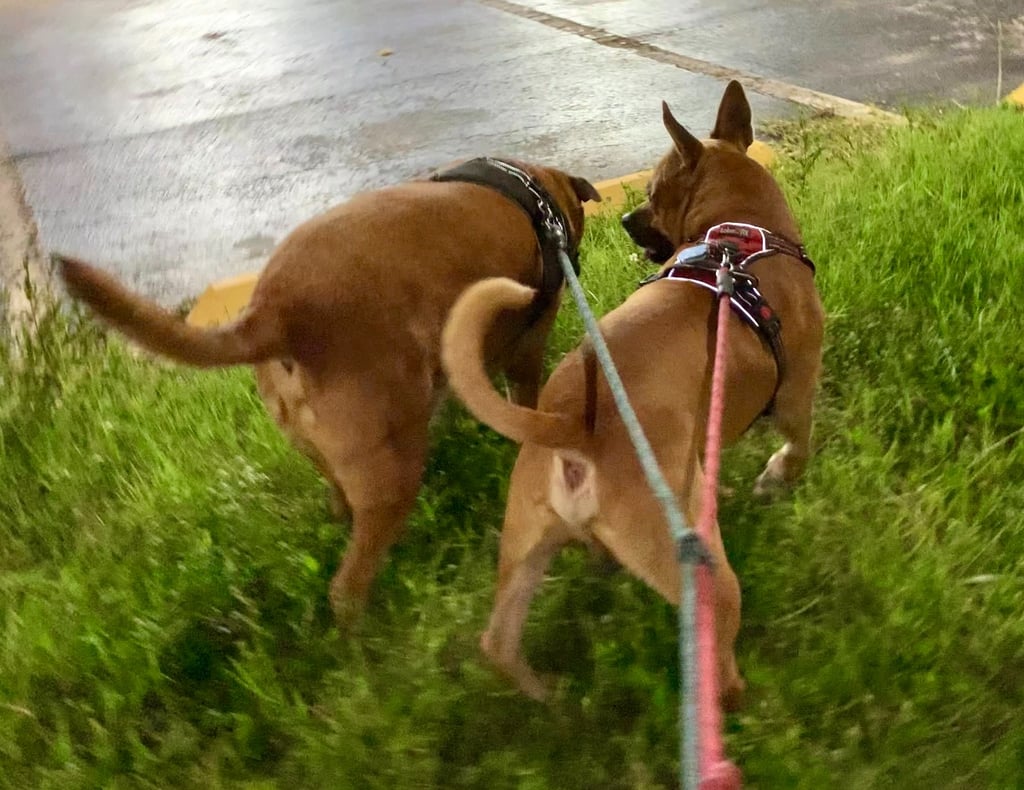
Brisk walking is one of the most accessible ways to support a dog’s everyday fitness. A purposeful walk at a steady, energetic pace can raise the heart rate, strengthen muscles, help manage body weight, and promote emotional well-being. It also gives dogs regular opportunities to spend time with their owners and develop confidence in familiar surroundings. The appropriate pace and duration depend on the dog’s age, breed, health, and current fitness level.
A brisk walk is different from a slower “sniffari.” During a sniffari, the dog is encouraged to investigate scents, examine its surroundings, and move at a comfortable pace rather than maintain a continuous forward rhythm. Sniffing provides important mental stimulation: it helps dogs process information about their environment, make choices, and satisfy natural investigative behaviours. Although the physical effort may be gentle, concentrated scent work can leave a dog pleasantly tired. Both walking styles are valuable, and they can be combined during the same outing.
To keep daily exercise engaging, vary routes, surfaces, duration, and pace when appropriate. Grass, packed earth, and other suitable surfaces may provide different sensory experiences, while unfamiliar locations should be introduced gradually. Monitor body language, especially in dogs that are nervous or easily overwhelmed, and allow them time to observe before continuing.
Use secure, well-fitting equipment and choose routes away from unsafe traffic or unstable terrain. In warm weather, avoid the hottest part of the day, check pavement temperature, and provide water; in cold or icy conditions, protect vulnerable paws and limit exposure when necessary. Carry water on longer outings or whenever conditions require it. Dogs that are unfit, elderly, overweight, or prone to joint problems may need shorter walks, gentler surfaces, and more recovery time. A daily walk should be adapted to the individual dog, not treated as a fixed-distance requirement.
Fetch can provide an efficient burst of physical and mental activity, especially for dogs that naturally enjoy retrieving. Short runs encourage acceleration, coordination, and quick changes in movement, while waiting for the toy and locating it add focus and problem-solving. Begin with a few minutes of calm walking to warm up muscles and joints before throwing. Choose a level, secure surface, such as short grass, and use a toy that is large enough to prevent accidental swallowing but light enough for comfortable carrying.
Keep throwing sessions controlled rather than treating repeated, nonstop sprints as the goal. Abrupt stops, sharp turns, and high-impact leaps can worsen existing joint injuries or create problems for dogs with orthopedic vulnerabilities. For these dogs, make lower throws, roll the toy along the ground, or use slower retrieval games that reduce jumping and sudden braking. Watch for limping, stiffness, reluctance, or unusual fatigue, and end the game if these signs appear.
Tug-of-war offers a different form of exercise and can support upper-body strength, concentration, impulse control, and the bond between dog and owner. Use one designated tug toy and establish clear rules from the beginning. Teach a reliable release cue, reward the dog for letting go, and pause the game if teeth touch skin. Keep movements horizontal and moderate; avoid pulling upward, jerking forcefully, or twisting the dog’s neck and body. The dog should be able to stop easily when asked.
When outdoor activity is limited by weather, space, or mobility concerns, vary the routine with toy searches, gentle rolling games, or controlled indoor play. Hiding a familiar toy in an accessible room encourages scent work and movement without demanding fast running. Several brief games spread throughout the day can provide meaningful exercise while allowing adequate recovery. Adapt the pace, surface, and intensity to the individual dog’s age, fitness, size, and physical condition.
Swimming can be a valuable low-impact activity for dogs because the water supports much of the body’s weight while allowing the limbs to move against gentle resistance. This combination can help build muscle strength and cardiovascular endurance without placing the same stress on the joints as running or repeated jumping. It may be particularly useful for some senior dogs, overweight dogs, or dogs rebuilding fitness after an injury. However, swimming is not appropriate for every dog or every condition. If a dog has arthritis, an injury, heart or breathing problems, or another medical concern, obtain veterinary approval before adding swimming to its exercise routine.
Safety should remain the priority. Never assume that a dog can swim simply because it is comfortable around water; body shape, age, confidence, and breed characteristics can affect swimming ability. Introduce water gradually in a calm, shallow setting, and use a properly fitted canine life jacket in unfamiliar, deep, or moving water. Supervise the dog continuously, even when it appears to be an experienced swimmer. Pools, ponds, and shorelines should have a clearly accessible exit, and the dog should be guided out before it becomes exhausted. Afterward, rinse away chlorine, salt, or pond residue, then dry the coat and ears thoroughly to help reduce skin and ear irritation.
Other joint-conscious activities can provide variety. Slow leash walks on level, stable surfaces encourage regular movement without excessive impact. Where a veterinarian considers it suitable, controlled hill walking can gradually strengthen the hindquarters, although steep slopes and slippery ground should be avoided. Gentle mobility exercises, such as carefully guided weight shifts or range-of-motion movements, may support flexibility when demonstrated by a veterinary professional. For dogs needing structured rehabilitation, supervised underwater treadmill sessions can provide controlled resistance and buoyancy under the direction of a veterinary rehabilitation specialist.
Low-impact does not mean risk-free. Exercise should be increased gradually, with rest breaks and close observation throughout. Stop the session if the dog shows unusual fatigue, limping, reluctance to continue, weakness, pain, or abnormal breathing. Persistent or severe signs warrant prompt veterinary advice before exercise resumes.
Daily exercise for dogs involves more than physical movement. Mental challenges can be equally tiring, particularly for dogs that become bored easily, live in small spaces, or cannot tolerate long workouts. Obedience practice, scent games, trick training, puzzle toys, and simple agility exercises encourage dogs to think, make choices, and stay engaged without requiring continuous running.
Begin with short, beginner-friendly drills. A sit-stay sequence can involve asking for a sit, waiting briefly, changing position, and rewarding the dog for remaining calm. Recall practice, target training, and learning to identify or retrieve named toys build attention and communication. Scent work can be as simple as hiding treats around one room and encouraging the dog to find them. These activities can gradually become more difficult as the dog gains confidence and understands the cues.
Agility exercises provide additional physical and cognitive benefits. Navigating low obstacles, walking around cones, stepping over poles, or moving through a simple tunnel can improve coordination, body awareness, confidence, and communication with the handler. Introduce each activity slowly, using stable equipment and generous rewards. Puppies should avoid high-impact jumping and intense, repetitive drills while their joints and growth plates are developing. Choose age-appropriate movements and ask a veterinarian for guidance when necessary.
Training is most effective when sessions remain brief, clear, and positive. Use consistent cues, reward desired responses promptly, and provide frequent breaks before the dog becomes frustrated or overtired. Mental work can also be incorporated into ordinary walks. Practice loose-leash walking, reward regular check-ins, pause for brief obedience exercises, or add supervised scent-based searches along the route. Combining movement with problem-solving creates a balanced routine that supports physical fitness, focus, and emotional well-being, even when extended exercise is unsuitable.
Exercise requirements change considerably as a dog grows, so an effective daily routine should reflect age, physical development, temperament, and health. Puppies benefit from short, frequent periods of activity rather than strenuous workouts. A commonly used starting guideline is approximately five minutes of exercise per month of age, up to twice daily. For example, a four-month-old puppy might begin with about 20 minutes per session. This is a general planning aid, not a strict medical rule; individual puppies may need more or less activity depending on breed, size, confidence, and veterinary advice.
Puppy exercise should emphasize exploration, socialization, gentle play, and basic training. Sniffing, learning simple cues, and playing on suitable surfaces can provide both physical movement and mental enrichment. Avoid forced running, repetitive jumping, abrupt twisting, and long hikes, which may place unnecessary strain on developing joints. Rest is equally important, particularly after periods of excitement or concentrated learning.
Adult dogs generally require more consistent and purposeful activity. Many companion breeds can thrive with approximately 30 to 60 minutes of exercise each day, divided into one or more walks and play sessions. High-energy and working breeds may need one to two hours of robust activity, alongside mental stimulation such as scent games, obedience practice, puzzle toys, or structured tasks. The appropriate amount is indicated not only by breed but also by the dog’s recovery, behavior, and overall fitness.
Senior dogs often benefit from shorter, gentler, and more frequent outings. Walks lasting 10 to 15 minutes several times a day can support mobility while reducing stiffness and fatigue. Overweight dogs should also begin with manageable, low-impact movement and increase duration gradually; sudden intense exercise can raise the risk of pain or injury. Swimming, controlled walking, and indoor enrichment may be useful alternatives when joints are sensitive. Veterinary guidance is especially important when age, breed, excess weight, arthritis, heart disease, or another chronic condition affects mobility. A veterinarian can help establish safe duration, intensity, surfaces, and progression for an individual dog.
A practical weekly plan should combine seven to fourteen walks with varied daily activity, adjusted to the dog’s age, fitness, temperament, and health. Regular walks can provide the foundation, while occasional sniff-focused outings allow the dog to explore at a slower pace and receive valuable mental stimulation. Add short play sessions, brief training drills, and, where suitable, swimming or another low-impact activity to create variety without relying on intense exercise every day.
Begin below your dog’s maximum ability, particularly after inactivity, illness, weight gain, or a long interruption in routine. Increase walking time, distance, or intensity gradually rather than changing several elements at once. A schedule might include one or two ordinary walks on most days, a longer exploratory outing once or twice weekly, and lighter play or training on recovery days. The most effective routine is one the dog can repeat comfortably and consistently.
Monitor your dog during activity and afterward. Appropriate exercise usually results in comfortable settling, normal appetite, steady energy, and recovery by the following day. Persistent panting, marked exhaustion, limping, stiffness, reluctance to move, soreness, damaged paw pads, vomiting, or breathing difficulty indicates that the session was too demanding or that medical advice is needed. Do not treat these signs as a normal part of fitness building.
Environmental precautions also matter. Avoid the hottest parts of the day, test pavement before walking, and provide access to water, shade, and rest. Shorten outings in humid or unusually warm conditions, and allow additional recovery time when your dog appears tired or sore. Older dogs and those with reduced mobility may benefit from several gentle sessions instead of one demanding walk.
The right exercise routine is consistent, enjoyable, age-appropriate, and flexible. Seek veterinary guidance before increasing activity if your dog has pain, obesity, heart or respiratory disease, a recent injury, or unusual intolerance of exercise. A professional assessment can help establish safe limits and turn daily movement into a sustainable part of lifelong care.